A faster run or a steeper climb?

The 1750, 2450 and X24 give you the same size running surface. What changes is the pace you can reach, the hill you can climb and how much of your room the treadmill occupies after your workout.

Compare the three models ↓
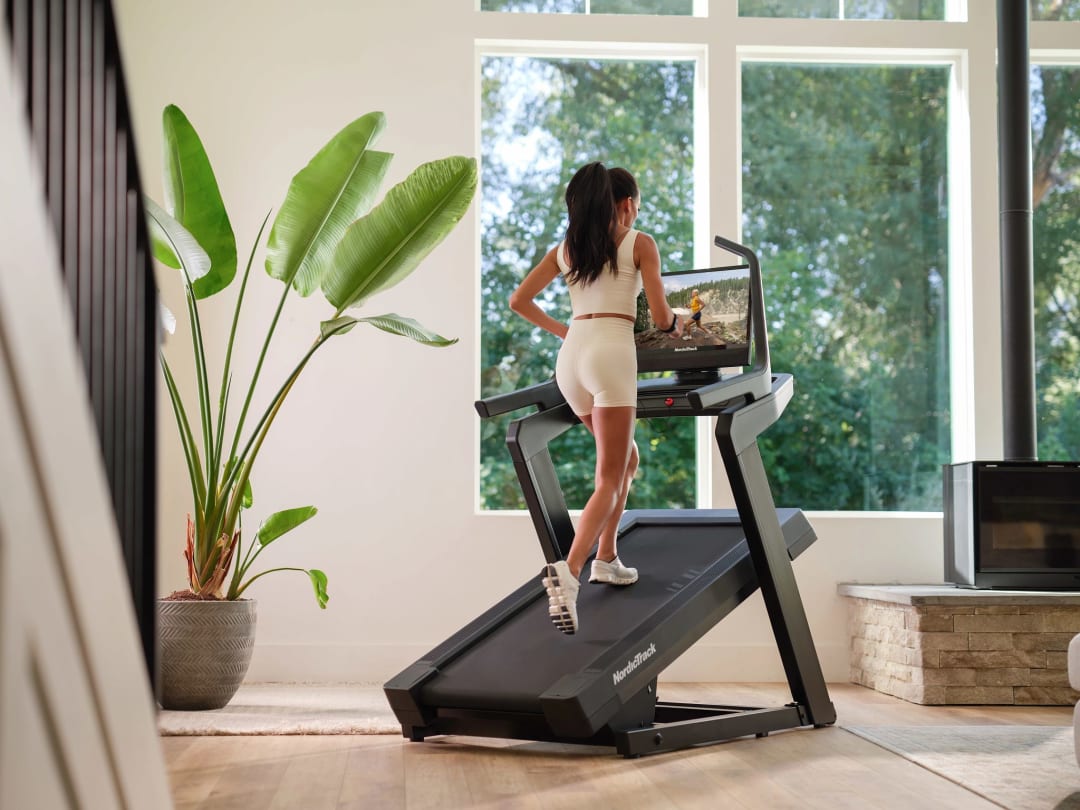
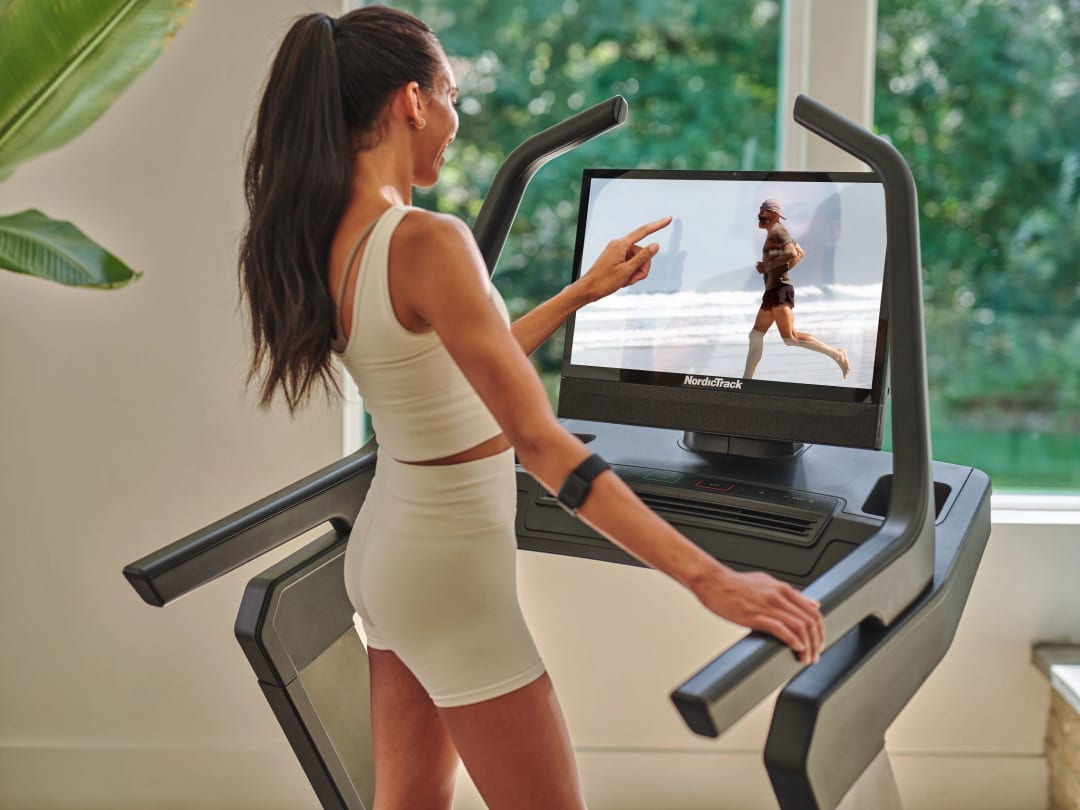
Runner training on the Commercial 1750 in a home gym

Which treadmill fits your routine?

Start with the sessions you do most weeks. A faster belt, a steeper deck and a larger screen solve different problems.

NordicTrack Commercial 1750 with its deck lowered

Everyday running

Commercial 1750

A 16-inch pivoting screen and a 12 mph top speed suit steady runs and most home intervals. Choose it if you want a full-size belt and a deck you can fold after a run.

Is the upgrade worth it? Start here if most of your training is walking, steady running or intervals within 12 mph. All three have the same belt size, so upgrading buys you different capabilities rather than extra stride room.

See 1750 price
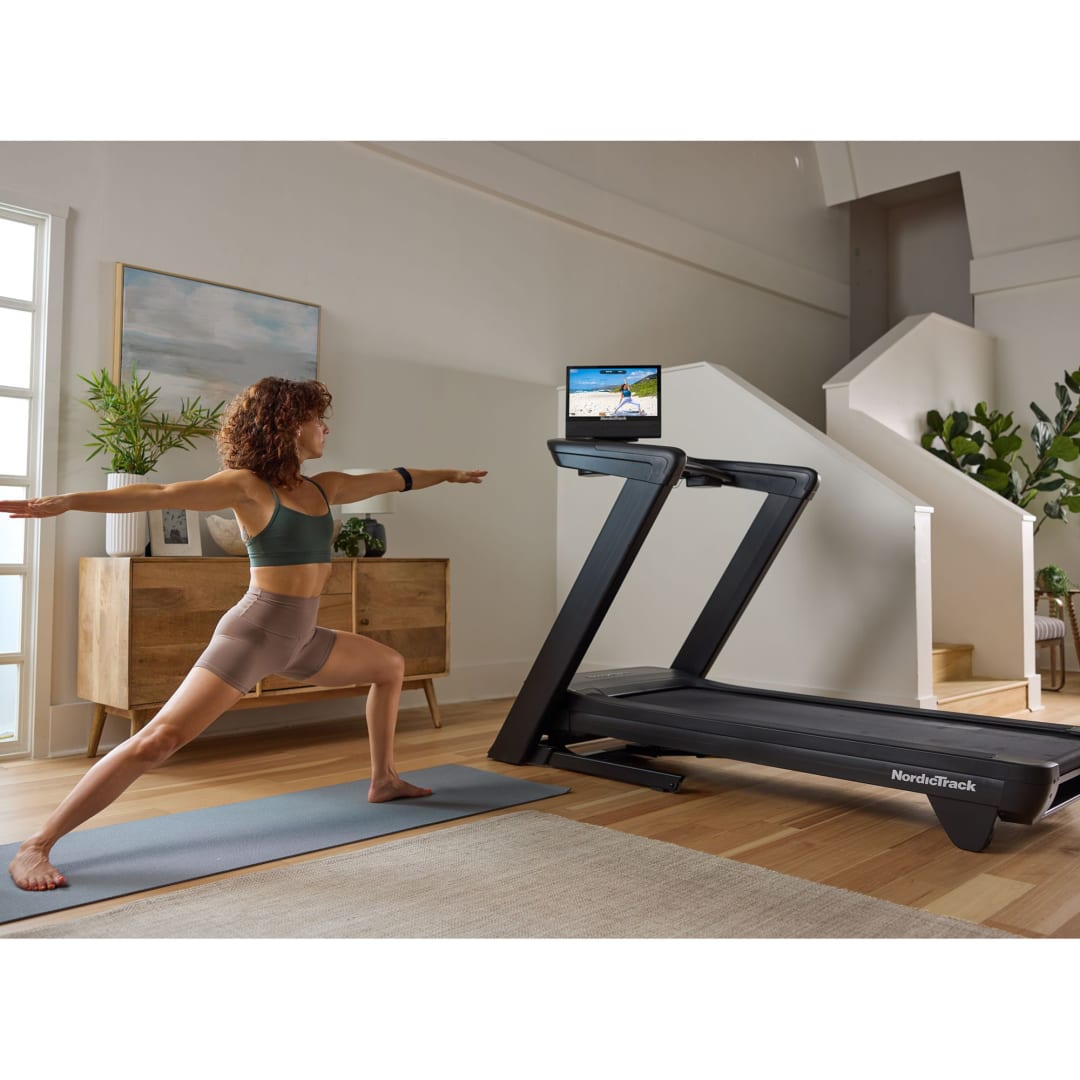
NordicTrack Commercial 2450 with a 24-inch console

Faster intervals

Commercial 2450

The larger display is easier to follow from a mat beside the treadmill. Its 14 mph top speed gives faster runners extra room for short repeats, in the same floor footprint as the 1750.

Is the upgrade worth it? Pay for the 2450 if you want the 24-inch screen for floor workouts or regularly train above 12 mph. If neither changes how you work out, the 1750 is the better place to start.

See 2450 price
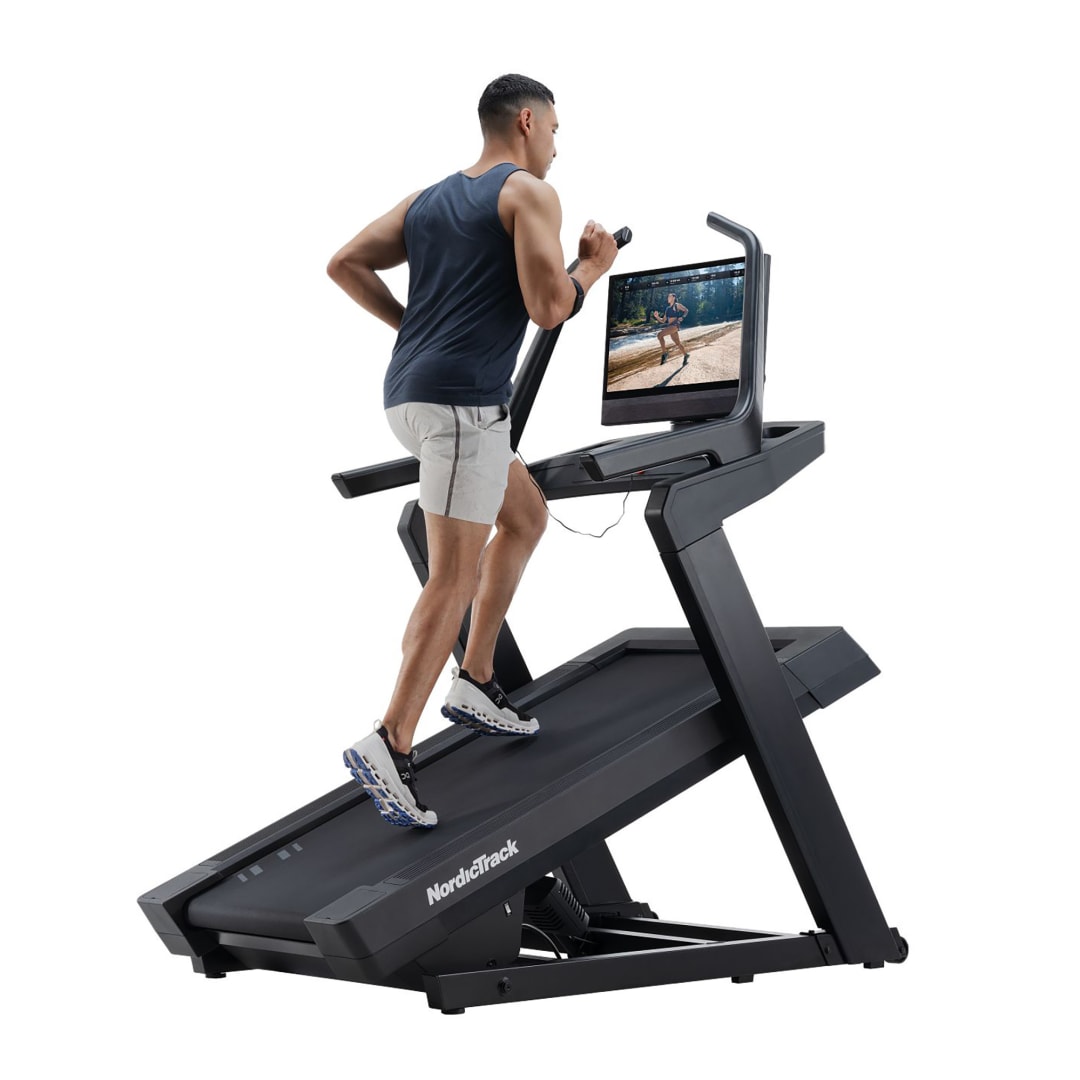
NordicTrack X24 incline treadmill in side view

Hill and hiking training

X24 Incline Treadmill

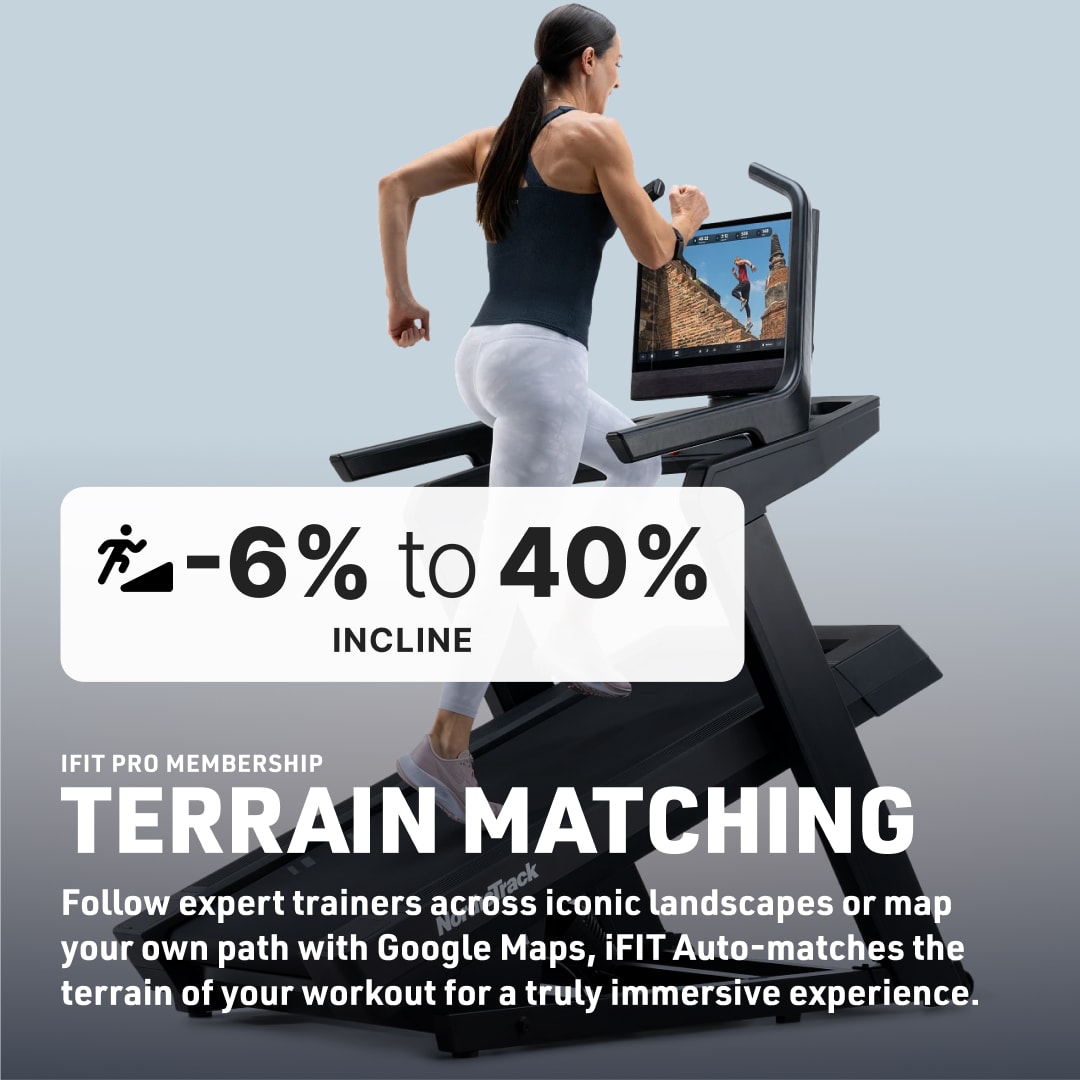
The X24 takes a walking workout well beyond the Commercial models’ 12% incline. Choose it for sustained climbs and downhill segments in a room where the machine can stay set up.

Is the upgrade worth it? Choose it if sustained steep climbs or deeper descents are a regular part of your training and you have a permanent spot for it. If your hills stay within 12% and you want a 24-inch screen, start with the folding 2450.

See X24 price

The three treadmills side by side

All three have a 22-by-60-inch belt. If you want more room for a long stride, moving from the 1750 to the 2450 or X24 gives you the same belt dimensions.

Training and hardware specifications
Feature Commercial 1750 Commercial 2450 X24
Model number NTL17125 NTL19125 NTL39225
Top speed 12 mph 14 mph 12 mph
Top speed in km/h (approx.) 19.3 22.5 19.3
Incline / decline 12% / −3% 12% / −3% 40% / −6%
Pivoting screen 16 in 24 in 24 in
Belt (W × L) 22 × 60 in 22 × 60 in 22 × 60 in
Deck cushioning RunFlex™ RunFlex™ SpringFlex™
Frame Folding Folding Fixed
User weight limit 400 lb 400 lb 400 lb

What changes during a workout?

Commercial 1750 console with physical controls below the screen
Commercial 1750 · 16-inch pivoting console.

1750 or 2450 for running?

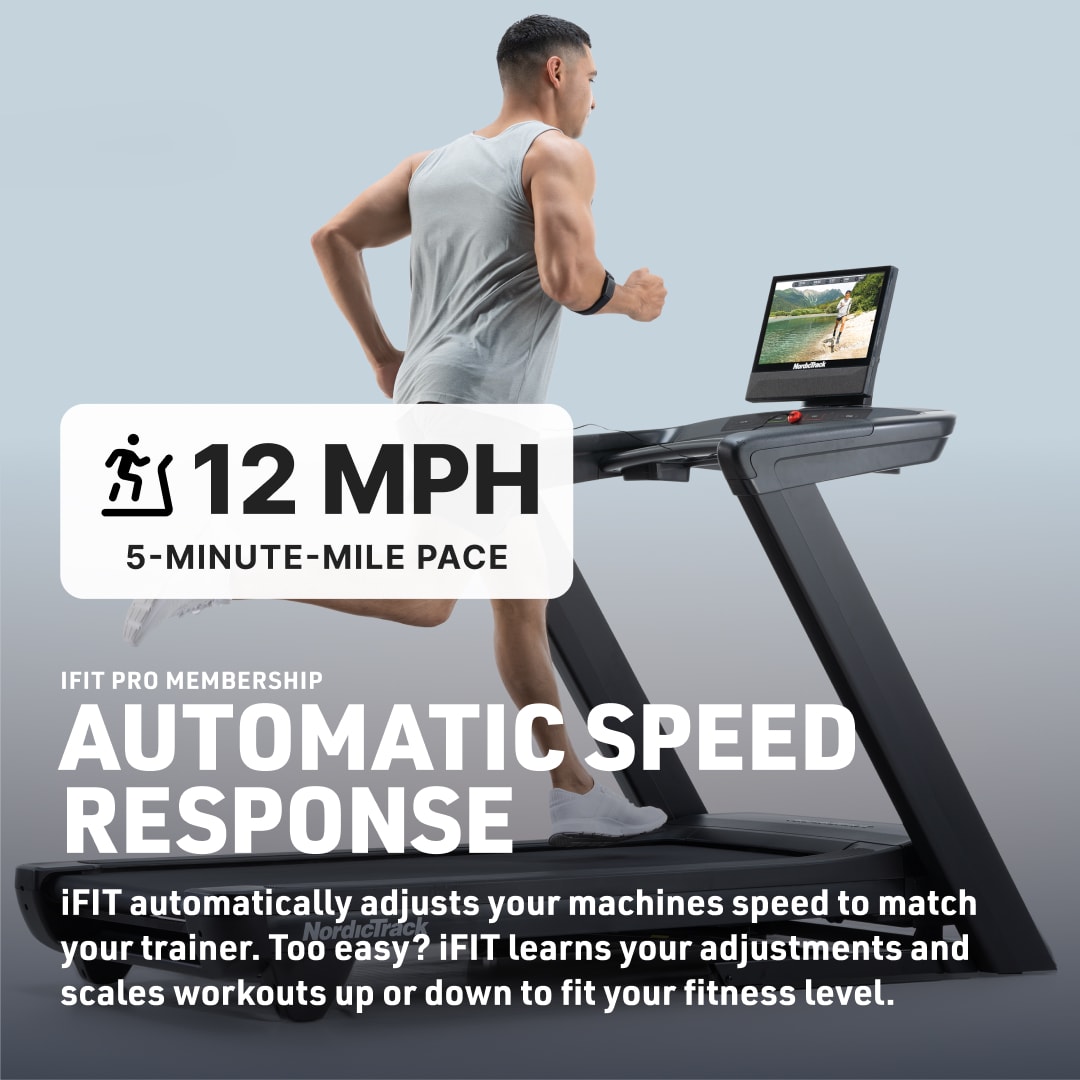
At 10 mph, both machines deliver a six-minute mile. At 12 mph, both reach a five-minute mile. The 2450 has another 2 mph available, reaching about 4 minutes 17 seconds per mile at its maximum. If your fastest repeat is below 12 mph, the screen is likely to be the difference you notice every day.

The 2450’s 24-inch screen measures eight inches more diagonally than the 1750’s. Both pivot, which matters if you follow a strength session from the floor. Think about where your mat will sit and whether you can see the screen from there.

Commercial 2450 24-inch touchscreen and console
2450 · A close look at the larger pivoting console.
X24 touchscreen with the speed and incline shortcuts underneath
X24 · The same 24-inch screen size with a wider incline range.

2450 or X24 for hill training?

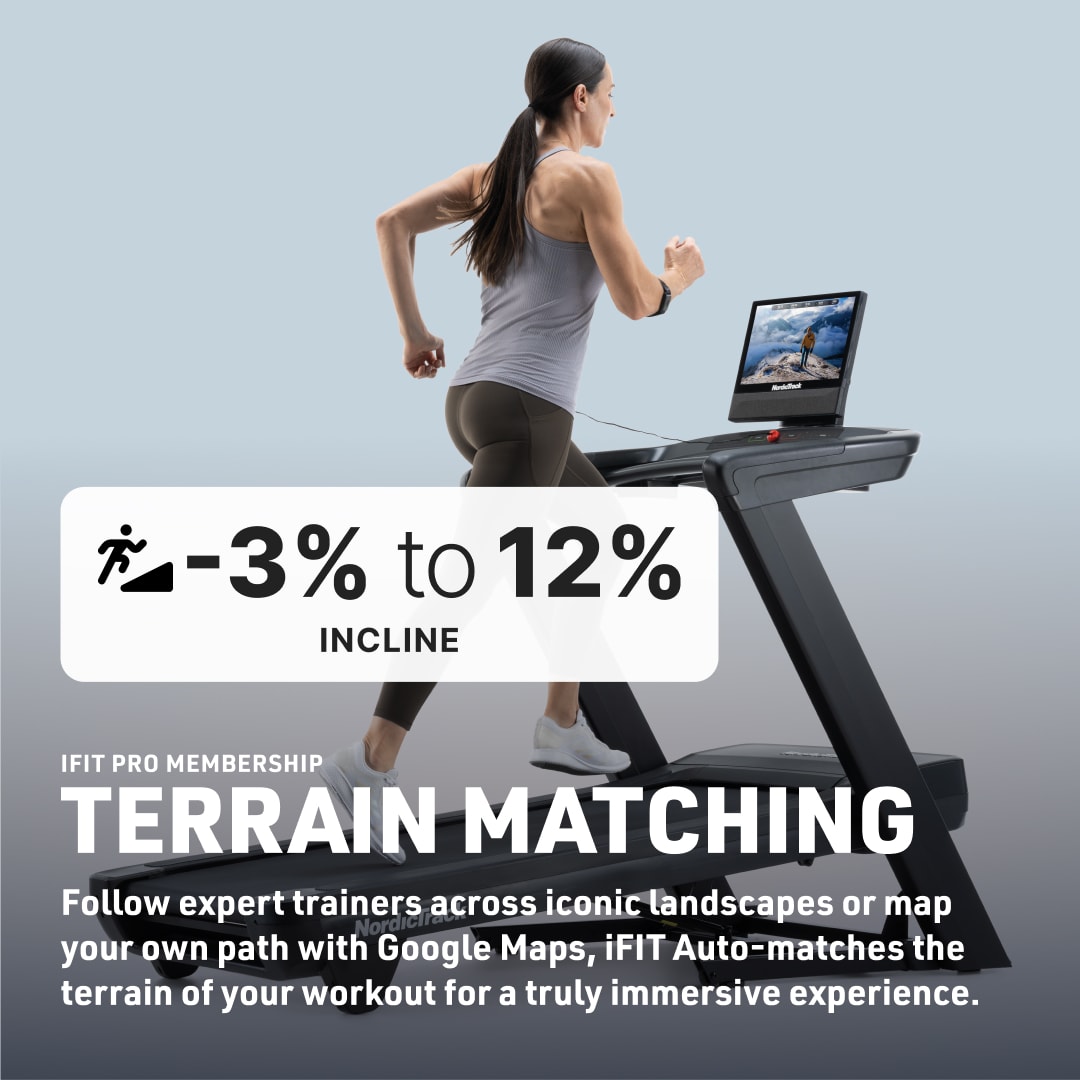
Both have a 24-inch screen. The 2450 reaches a 12% incline and a −3% decline. The X24 extends that range to a 40% climb and a −6% descent. A 40% grade means 40 units of rise for every 100 units of horizontal distance.

If you alternate flat running with rolling hills, compare your usual training pace with the 2450’s speed range. If a long uphill walk is the workout itself, the X24 lets you keep walking while substantially increasing the steepness.

Athlete walking on the X24 with the deck raised
X24 · Walking with the incline deck raised.
Runner’s feet on the Commercial 1750 belt
1750 and 2450 · RunFlex cushioning on a folding frame. The 1750 is shown.
Close-up of the X24 belt and SpringFlex deck
X24 · SpringFlex cushioning on the fixed incline frame.

Will it fit your room and delivery route?

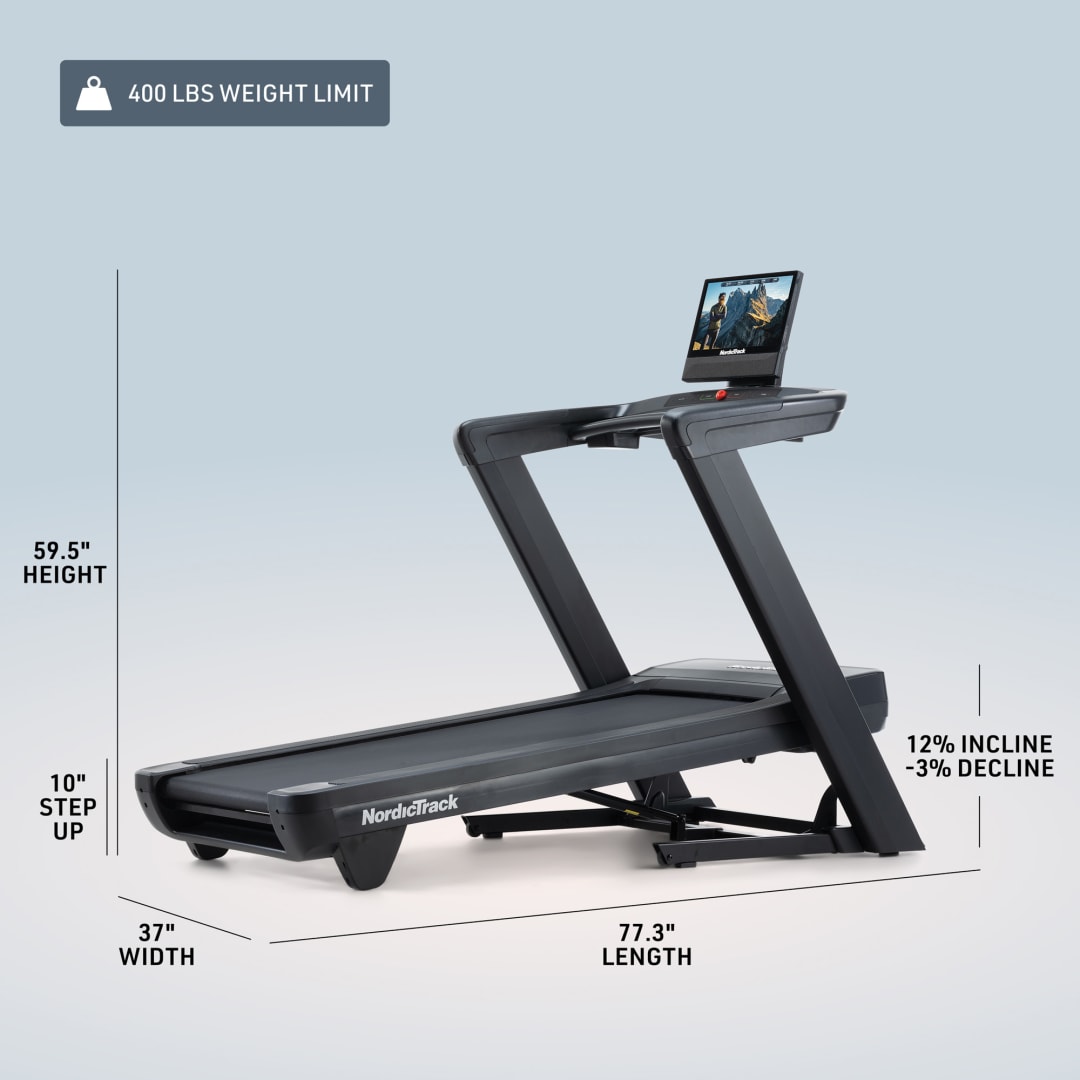
The X24 is 7.4 inches shorter front to back than the two folding models. It is also wider, taller and has the highest step-up. A shorter machine can still be the harder one to place in a basement.

Room and delivery measurements
Feature Commercial 1750 Commercial 2450 X24
Assembled L × W × H (in) 77.3 × 37 × 59.5 77.3 × 37 × 63.4 69.9 × 38.1 × 73.3
Assembled L × W × H (cm) 196.3 × 94.0 × 151.1 196.3 × 94.0 × 161.0 177.5 × 96.8 × 186.2
Step-up height 10 in / 25.4 cm 10 in / 25.4 cm 13.7 in / 34.7 cm
Approx. carton L × W × H (in) 84 × 35 × 15 84 × 35 × 15 77 × 42 × 34
Approx. packed weight 312 lb 332 lb 445 lb
  1. Mark the operating footprint. Tape out the assembled length and width on the floor. Allow the free space specified in the owner’s manual around the machine and behind the belt.
  2. Check overhead space. Measure to the lowest ceiling obstruction above the belt, including beams and ducts. Step-up height is measured at entry. For a low ceiling, give our team the tallest user’s height and the ceiling measurement so we can help confirm clearance at the incline you plan to use.
  3. Trace the delivery path. Measure the narrowest doorway, stair landing and tightest turn. The carton dimensions in the table are rounded for planning. Confirm the exact package and delivery service for your address before ordering.
Commercial 1750 folded upright in a home
1750 · The raised deck frees up floor space while the console stays in place.
Folded dimension drawing for the Commercial 2450
2450 · Open the drawing for the folded dimensions.
X24 dimensions in side, front and top views
X24 · Open the drawing for dimensions and step-up height.

Basement treadmill fit checklist

A treadmill can fit on the floor and still be a poor fit under a bulkhead or around a stair turn. Check the running area, ceiling and delivery route separately.

Measure the space you’ll actually use

  1. Floor space: Mark the treadmill footprint and check the free space around it. The owner’s manuals for these model numbers call for at least 8 ft (2.4 m) behind the machine and 2 ft (0.6 m) on each side.
  2. Ceiling height: Measure from the finished floor to the lowest obstruction over the full belt area, including soffits, beams and lights. Record the tallest user’s height in training shoes, mat thickness and the steepest incline they expect to use.
  3. Deck height at incline: Ask for the floor-to-belt height where you’ll walk or run at your planned incline. The published step-up height measures entry to the deck. Overhead fit also depends on where you stand, how the deck rises and how much your head moves during a stride. A tight fit needs an in-person check with room for movement.
  4. Delivery route: Measure clear opening widths with the doors open, the stairwell height and the usable dimensions of each landing. Photograph the narrowest turn. Have the delivery team confirm what can be moved through it and what your service includes before ordering.
Floor planning from published footprints and manual clearances
Models Machine width plus both side clearances Machine length plus rear clearance
Commercial 1750 and 2450 About 7 ft 1 in About 14 ft 5 in
X24 About 7 ft 2 in About 13 ft 10 in

These estimates are based on the assembled footprint. Leave any additional access space your layout or owner’s manual calls for. If you plan to fold the 1750 or 2450, check the space needed to raise the deck as well as its stored footprint.

Ordering in Canada: Standard freight is curbside. If you need the treadmill taken downstairs or assembled in a specific room, confirm availability and pricing for your postal code before checkout. See our shipping policy and delivery and setup information.

Owner’s manuals: 1750 (NTL17125.0), 2450 (NTL19125.0) and X24 (NTL39225.0).

What can you use with and without iFIT?

In manual mode, you set the belt speed and incline yourself. A paid iFIT Pro membership and Wi-Fi unlock the on-screen workout library and compatible guided sessions.

What to expect at the console
If you want to… What to expect
Walk or run without a paid plan Once the console is set up, use the machine’s Start button or the manual start option on the home screen. NordicTrack Canada confirms that manual mode remains available without a paid membership.
Follow a coached trail on the display Use Wi-Fi and an active iFIT Pro membership for the full on-machine library and compatible trainer-controlled workouts. Each treadmill can follow the workout only within its own speed and grade ranges.
Set up in a room with weak Wi-Fi Plan for a connection during initial console setup and updates. If you need the treadmill to work after a full restart with Wi-Fi disconnected, ask for that exact demo on the console version you’re buying.

Membership details from the NordicTrack Canada iFIT FAQ. Start button and setup steps are documented in the owner’s manuals above.

Following a route

During a compatible workout, the treadmill can change speed and slope as the trainer moves through a route. Each model stays within its own elevation range. The X24 can reproduce a steeper climb than either Commercial treadmill.

SmartAdjust adapts compatible workouts to your pace. ActivePulse uses heart-rate data from a compatible Bluetooth monitor to adjust supported sessions. The monitor is a separate accessory.

To mix treadmill work with a floor session, leave space beside the machine for a mat and pivot the display toward it.

iFIT hiking workout preview. Open the clip directly.

How to compare all three in a showroom

Call ahead to find out which models are on the floor. Bring the shoes you normally train in and compare the machines at settings you actually use.

  1. Use the same pace first. Try a flat walk or jog at the same speed on each model. If you run intervals, repeat your usual easy-to-fast transition. Compare how the belt responds during the first few strides.
  2. Compare the same hill. Try a familiar walking pace at the same incline on each machine. If steep hiking is the reason you’re considering the X24, ask for a separate demonstration above the Commercial models’ 12% limit.
  3. Listen with the speakers muted. Hear the belt with and without someone on it at the same speed. Compare what you hear from the same place in the room. A showroom can help you compare sound, while how much vibration travels through the floor will depend on your home.
  4. Try your everyday setup. Step onto each deck, fold and lower the 1750 or 2450 with staff guidance, and check whether you can read the console from a mat beside the machine. If you prefer manual workouts, ask to start one before opening the iFIT library.

Find a Fitness Factory showroom and bring your room and delivery measurements.

Questions Canadian buyers ask

Can I use the step-up height to calculate my ceiling clearance?

Use it as an entry-height comparison. For overhead clearance, measure the belt where you’ll actually stand at your planned incline and account for the tallest user in shoes, their movement and any mat under the treadmill. See the basement fit checklist.

Can I use this guide when shopping for a used NordicTrack?

Ask the seller for a photo of the model label. This guide covers the NTL17125 Commercial 1750, NTL19125 Commercial 2450 and NTL39225 X24. Match the exact model and revision to its manual because a familiar product name can span different consoles and hardware.

Which model gives me a 24-inch screen and folds?

The Commercial 2450 combines both. The X24 also has a 24-inch display and its frame stays in place. The 1750 folds and has a 16-inch display.

Which would you choose for a shared family gym?

If the treadmill shares space with floor workouts, start with the 1750 and 2450. They occupy the same floor area when open. Compare the 2450’s larger screen from the mat and ask whether anyone in the household needs speeds above 12 mph.

Does the X24 give me more room to run?

All three belts measure 22 inches wide by 60 inches long. The extra capability on the X24 is the elevation range. Its higher step-up is also worth trying in person.

Can I follow a trail at a walking pace?

Yes. You can walk and set the incline manually. With iFIT Pro, compatible trail workouts can adjust the machine as the route changes. The X24 offers the widest grade range of these three models.

What should I bring to a showroom?

Bring your ceiling height, available floor measurements, the tallest user’s height and a photo of any tight turn on the delivery route. Call ahead to confirm which models are on display. Try your usual pace and check the console from both the belt and the floor.

Where do I find today’s Canadian price and delivery options?

Open the 1750, 2450 or X24 product page for current pricing and offer details. Check the delivery coverage and service level available for your postal code.

Try the difference in person

Ask a Fitness Factory showroom which models are on the floor. A few minutes at your usual pace can tell you more about the deck and screen position than a spec sheet.

Find a Canadian showroom

NordicTrack Canada specifications for the Commercial 1750, Commercial 2450 and X24. Product photography by NordicTrack and iFIT.